Kitchen Renovation
Kitchen Renovation in Dubai: Cost, Timeline, Materials & Process
A practical guide to kitchen layouts, cabinetry, countertops, lighting, timelines, and planning decisions for Dubai homes.
Renovator advice
Want help with this project?
Share your space and goals with Renovator on WhatsApp.
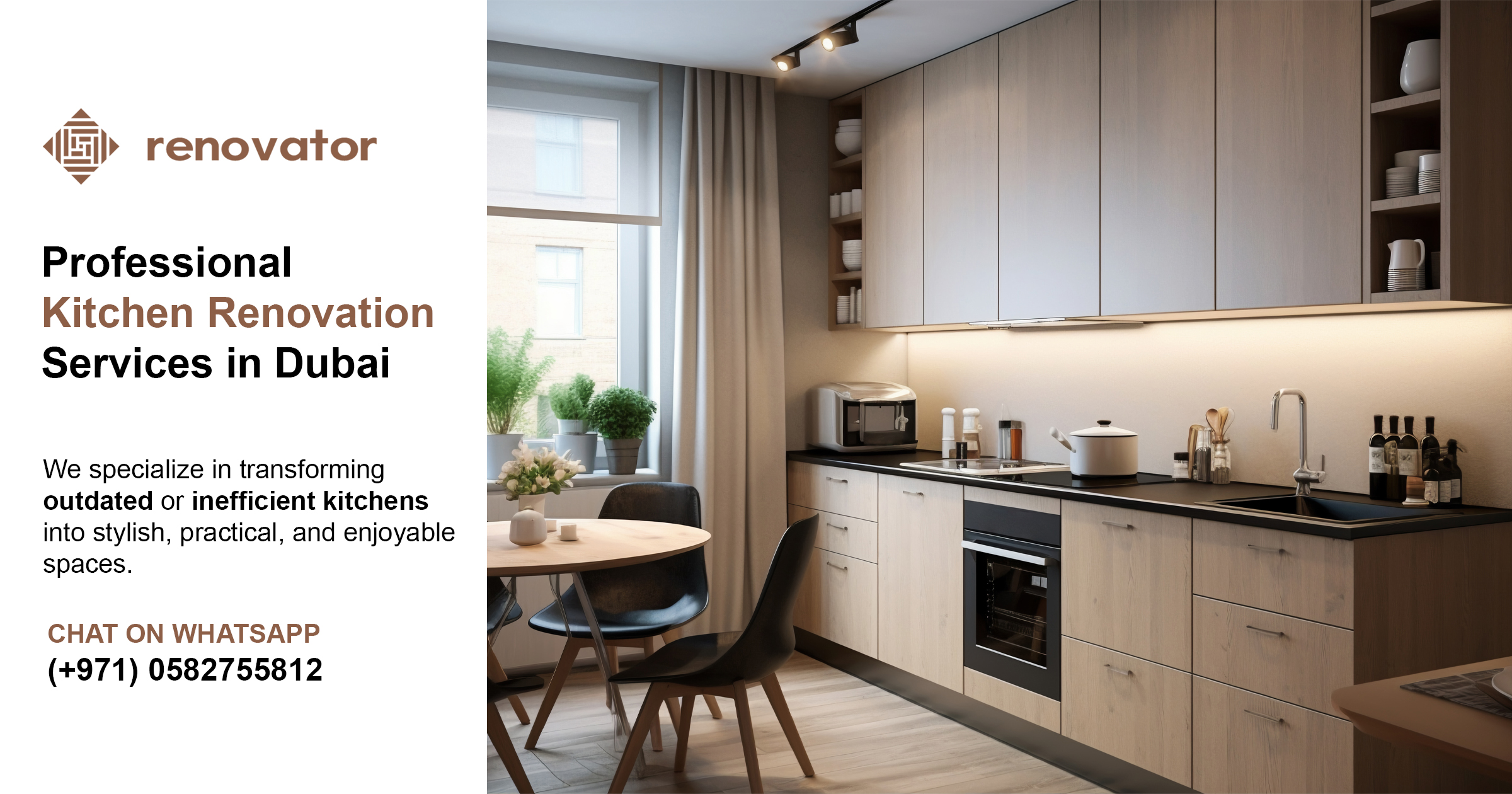
Why Kitchen Renovation Needs Careful Planning
The kitchen is usually one of the most complex rooms to renovate because it brings together cabinetry, countertops, appliances, plumbing, electrical work, lighting, ventilation, flooring, painting, and daily workflow. In Dubai homes, it also has to work for different property types: compact apartment kitchens, open-plan living spaces, villa kitchens, rental units, and family homes where storage and durability matter every day. A kitchen can look modern in photos and still be frustrating if the layout, clearances, and storage were not planned properly.
Before choosing cabinet colors or countertop samples, define how the kitchen will be used. Do you cook daily or mostly use the kitchen for light preparation? Do you need more pantry storage, better appliance integration, a breakfast counter, or easier cleaning? Is the current layout uncomfortable, or are the finishes simply outdated? Are you keeping the same plumbing and electrical points, or is the renovation meant to change the way the kitchen functions? These questions shape the scope and cost more than the visual style.
Kitchen renovation should also connect to the rest of the home. In many Dubai apartments, the kitchen is visible from the living area, so the cabinet finish, lighting, wall color, and floor transition affect the whole interior. In villas, the kitchen may connect to dining, family living, outdoor areas, or a service kitchen. The best designs feel intentional rather than treated as a separate room.
Layout Comes Before Cabinet Finish
The layout determines whether the kitchen feels comfortable. A good layout reduces wasted movement between storage, washing, preparation, cooking, and serving. The classic work triangle is still useful, but modern kitchens often need more than a triangle. They need appliance zones, charging points, tall storage, dry food storage, waste management, cleaning storage, and space for coffee machines, air fryers, blenders, or other countertop appliances.
For small Dubai apartments, every cabinet needs to earn its place. Tall units can create pantry storage without taking over the room. Deep drawers may be more practical than low cabinets because they make pots and plates easier to reach. Corner solutions can help if the layout has awkward dead space. Overhead cabinets can add capacity, but they should not make the kitchen feel closed or heavy. Open shelving can look attractive, but it collects dust and should be used carefully.
For larger kitchens, the challenge is often proportion and flow. An island can be useful, but only if there is enough clearance around it. A long run of cabinets can look flat unless the design includes lighting, material contrast, glass, open display, or well-placed appliances. If the kitchen is open-plan, the back of the island, pendant lights, and cabinet line become part of the living room view.
Cabinets, Hardware, and Internal Storage
Cabinets are usually the biggest visible part of a kitchen renovation and often one of the largest cost drivers. The cabinet decision is not only about color. It includes board material, door style, finish type, edge details, hinges, drawer runners, handles, internal organizers, toe kicks, end panels, and installation accuracy. A kitchen with good hardware and clean installation will feel better in daily use than one that only looks attractive at handover.
Common finish choices include laminate, acrylic, painted finishes, veneer, and combinations with glass or metal accents. Laminate is practical and available in many styles. Acrylic can create a glossy modern look but may show fingerprints more easily. Painted finishes can look refined but need proper preparation and care. Veneer brings warmth but should be selected with maintenance expectations in mind. For rental units or busy family homes, durability and easy cleaning should weigh heavily in the decision.
Internal storage is where a kitchen becomes genuinely useful. Pull-out pantry units, drawer dividers, bin systems, spice pull-outs, tray storage, corner accessories, and appliance garages can make the kitchen easier to live with. These features add cost, but they can be worth it when they solve real problems. The key is to choose organizers for your habits, not just because they look impressive in a showroom.
Countertops and Backsplashes
Countertops carry a lot of visual and practical responsibility. They need to resist daily use, cleaning, heat, spills, and impact. Popular options in Dubai include quartz, granite, porcelain or sintered surfaces, marble, compact surfaces, solid surface, and laminate. Each has a different balance of appearance, cost, maintenance, and durability. Natural stone can be beautiful, but it may need more care. Quartz is popular because it offers consistent patterns and practical resistance. Porcelain and compact surfaces can create a premium look with strong performance, though fabrication quality matters.
The countertop decision should consider edge profile, thickness, sink type, hob cutout, waterfall edges, joints, and backsplash connection. A cheaper countertop can become expensive if fabrication, cutouts, or installation are poor. A premium countertop can lose its impact if the cabinets underneath are not level or strong enough. Always plan the countertop after cabinet measurements are confirmed.
Backsplashes protect the wall and complete the design. Tile remains practical, but stone-look slabs, porcelain sheets, glass, and easy-clean panels are also used. The backsplash should suit the cooking style. Heavy cooking may need a surface that wipes clean easily and handles oil, steam, and repeated cleaning. If under-cabinet lighting is included, the backsplash finish will be more visible, so uneven surfaces or poor joints can stand out.
Plumbing, Electrical, and Appliances
Kitchen renovation becomes more expensive when plumbing and electrical points move, but keeping everything exactly as it is can limit the design. The right decision depends on the benefit. Moving a sink or dishwasher may improve the layout, but it should be checked against drainage, wall routes, building constraints, and cost. Adding sockets may be essential if the current kitchen does not support modern appliance use. Lighting circuits may need adjustment if task lighting, under-cabinet LEDs, pendant lights, or feature lighting are added.
Appliances should be selected early. Built-in ovens, hobs, fridges, dishwashers, washing machines, microwaves, and extractor systems affect cabinet dimensions. If appliances are chosen late, cabinet fabrication may need changes. Ventilation should also be considered, especially in apartments where ducting options can be limited. An extractor should suit the cooking style and available route, not only the look.
Plan service access. A beautiful kitchen should still allow access to valves, filters, electrical points, and appliance connections. If everything is sealed behind panels with no thought for maintenance, simple repairs become difficult. This is especially important in rental properties and busy family homes.
Lighting Makes the Kitchen Work
Kitchen lighting should be layered. General ceiling lighting helps the room feel bright. Task lighting under cabinets makes preparation safer and easier. Decorative lighting can add warmth, especially in open-plan kitchens. Toe-kick lighting, shelf lighting, or internal cabinet lighting can be attractive, but they should be used with restraint and planned around maintenance access.
Color temperature matters. Very cool lighting can make a kitchen feel harsh, while very warm lighting can distort the appearance of food and materials. The best choice depends on the home, but consistency is important. Mixing too many light temperatures can make the kitchen look uneven. If the kitchen connects to the living area, coordinate lighting so the spaces feel related.
Switching should be practical. Task lighting should not depend on one inconvenient switch. Decorative lighting should be optional. If smart controls are used, there should still be a simple way to operate essential lights. Good lighting planning happens before cabinets and panels close the walls.
Cost Factors in Dubai
Kitchen renovation cost in Dubai varies widely because the scope can be very different from one project to another. A basic refresh may include painting, hardware, minor repairs, countertop replacement, or backsplash updates. A standard renovation may include new cabinets, countertop, sink, mixer, lighting, backsplash, and painting while keeping the same layout. A premium renovation may include custom joinery, upgraded hardware, stone or porcelain surfaces, integrated appliances, layout improvements, electrical and plumbing changes, and detailed finishing.
The largest cost drivers are cabinet size, cabinet material, countertop choice, hardware, appliance integration, plumbing and electrical changes, demolition, disposal, and site logistics. A small apartment kitchen with a simple same-layout renovation is very different from a villa kitchen with a large island, tall storage, premium surfaces, and multiple appliance zones. This is why a proper quote should explain the scope instead of only giving a total.
For a rough budget before the full quote stage, try the kitchen renovation cost calculator with your kitchen size, scope, finish level, and add-ons.
When reviewing a kitchen quote, check whether it includes dismantling, disposal, cabinet carcasses, door finish, hinges, drawer runners, handles, countertop supply and installation, sink and mixer, backsplash, electrical points, plumbing adjustments, lighting, painting, silicone, and final snagging. If these are unclear, the project may face variations later.
Timeline and Sequencing
A kitchen renovation usually moves through consultation, measurement, design confirmation, material selection, quotation, procurement, site preparation, dismantling, MEP adjustments, cabinet fabrication, installation, countertop templating, countertop installation, backsplash work, lighting, plumbing connections, painting, cleaning, snagging, and handover. The sequence may look simple, but several steps depend on each other.
Countertops often cannot be finalized until cabinets are installed or site measurements are confirmed. Backsplash work may depend on countertop installation. Electrical points must be planned before panels or cabinets block access. Appliance installation depends on exact cabinet dimensions. Delays in selecting materials can delay fabrication. For occupied homes, the timeline should also include dust protection and temporary kitchen planning.
Ask for a schedule that explains the key milestones. It does not need to predict every hour, but it should show when decisions are needed and when major work will happen. Good sequencing protects finished surfaces and reduces rework.
Common Kitchen Renovation Mistakes
One mistake is designing only for appearance. A kitchen can look clean and still have poor storage, bad lighting, uncomfortable clearances, or inconvenient appliance positions. Another mistake is choosing materials without thinking about cleaning. Glossy finishes, dark colors, and delicate surfaces can look premium but may show fingerprints, dust, or scratches. This is not a reason to avoid them, but it is a reason to choose them knowingly.
A third mistake is ignoring small details until installation. Handle position, socket location, sink depth, drawer clearance, bin location, under-cabinet lighting, and appliance ventilation all affect daily use. These are not glamorous decisions, but they are the decisions that make a kitchen feel professionally planned.
Finally, avoid comparing quotes without checking inclusions. A kitchen renovation quote that excludes countertop, backsplash, electrical work, or disposal is not comparable to a quote that includes them. The right comparison is scope against scope, material against material, and finish standard against finish standard.
How Renovator Helps Plan the Kitchen
Renovator can help connect the kitchen renovation with the rest of the property. If the kitchen opens into the living area, the cabinet finish may need to work with painting, wall paneling, media wall design, and lighting. If the kitchen is part of a wider home renovation, the sequence should avoid damaging finished work. If the project is mainly a kitchen upgrade, the focus can stay on layout, cabinetry, countertops, practical storage, and clean handover.
Before requesting an estimate, prepare photos of the current kitchen, rough measurements, appliance preferences, inspiration images, and a list of what is not working today. Mention whether you want to keep the same layout, whether the home is occupied, and whether the project needs to coordinate with painting, wall paneling, or other renovation work. That information helps Renovator advise on the right scope and the next step.
Related service
Kitchen Renovation Services
Revamp your kitchen with our top-notch kitchen renovation services in Dubai. From cabinets to countertops, our expert team delivers quality craftsmanship.
Kitchen Renovation
Kitchen Renovation Cost in Dubai: What Affects the Price?
A focused cost guide explaining the decisions that usually change kitchen renovation pricing in Dubai.
Read the GuideRenovator advice
Ready to plan your renovation?
Send us photos of your space on WhatsApp and our team will guide you on the next steps.