Wall Paneling & Feature Walls
Feature Wall Ideas for Dubai Apartments and Villas
Design-led feature wall ideas for living rooms, bedrooms, offices, and entertainment spaces in Dubai.
Renovator advice
Want help with this project?
Share your space and goals with Renovator on WhatsApp.
Choose the Feature Wall by Room Purpose
Feature wall ideas work best when they are chosen for the room, not copied directly from an inspiration photo. A bedroom feature wall should feel calm and supportive. A living room feature wall may need to organize the TV area or frame the main seating zone. An office feature wall should look professional and durable. A villa entrance wall may need to create a strong first impression. A rental apartment may need a simple upgrade that photographs well and is easy to maintain.
Use this ideas guide with the main wall paneling and feature walls in Dubai guide after you understand the materials, finishes, and planning basics.
Before choosing a design, ask what the wall needs to do. Should it add texture, warmth, storage, lighting, acoustic comfort, TV support, or a luxury focal point? Should it make the room feel taller, wider, calmer, or more dramatic? Should it hide minor wall imperfections or become part of a larger renovation? The answers will narrow the material and style options.
Dubai homes often have neutral finishes, tiled floors, and strong daylight. A feature wall can bring softness, depth, and personality. But too much detail can make a room feel busy. One well-designed wall usually has more impact than several competing surfaces.
Bedroom Feature Wall Ideas
A bedroom feature wall usually sits behind the bed, so it should support rest and comfort. Popular options include painted molding, soft panels, fluted wood, veneer, wallpaper-style texture, wall lights, LED backlighting, or a custom headboard effect. The design should relate to the bed width, bedside tables, curtains, and ceiling height.
For small bedrooms, vertical lines can make the wall feel taller. Light neutral colors keep the room calm. A simple framed panel design can add detail without overwhelming the space. For larger bedrooms, a wider headboard wall with integrated lighting, wood texture, or soft upholstered panels can feel more luxurious. If wall lights are included, wiring should be planned before installation.
Storage can also be integrated. Bedside niches, slim shelves, or hidden ledges may be useful, but they should not create clutter. In bedrooms, comfort and maintenance matter. Avoid materials that collect too much dust or are difficult to clean if the room is used daily.
Living Room Feature Wall Ideas
Living rooms often benefit from a feature wall because it anchors the main seating area. The wall may be behind the sofa, behind the TV, or in a dining corner. If the wall includes a TV, the design should be planned as a TV feature wall or media wall rather than only a decorative surface. Cable management, sockets, TV height, soundbar placement, and storage may all be needed.
A sofa feature wall can use panel molding, fluted panels, textured paint, wood accents, framed art lighting, or subtle LED details. The goal is to add depth behind the seating without making the sofa area feel crowded. If the sofa is already large or colorful, the wall may need to be quieter. If the furniture is minimal, the wall can carry more texture.
For open-plan living rooms, coordinate the feature wall with the kitchen, dining area, and media wall. Repeating one material or color can help the space feel connected. Avoid using too many feature materials in one room.
TV Feature Wall Ideas
A TV feature wall sits between simple wall paneling and a full custom media wall. It may include a panel behind the TV, a floating cabinet, LED lighting, stone-look surface, wood slats, or painted trim. If storage and cable management are important, it may become a full media wall project.
The TV should be placed for comfortable viewing, not just visual symmetry. The feature should leave enough space around the screen and avoid glare. Lighting should be soft and controlled. Strong LED strips around a TV can look dramatic in photos but may be distracting during evening viewing.
TV feature walls are especially useful in Dubai apartments because they can hide wires and make the living room feel cleaner. In villas, they can become a stronger architectural element with larger panels, richer materials, and integrated storage.
Wood Slat and Fluted Wall Ideas
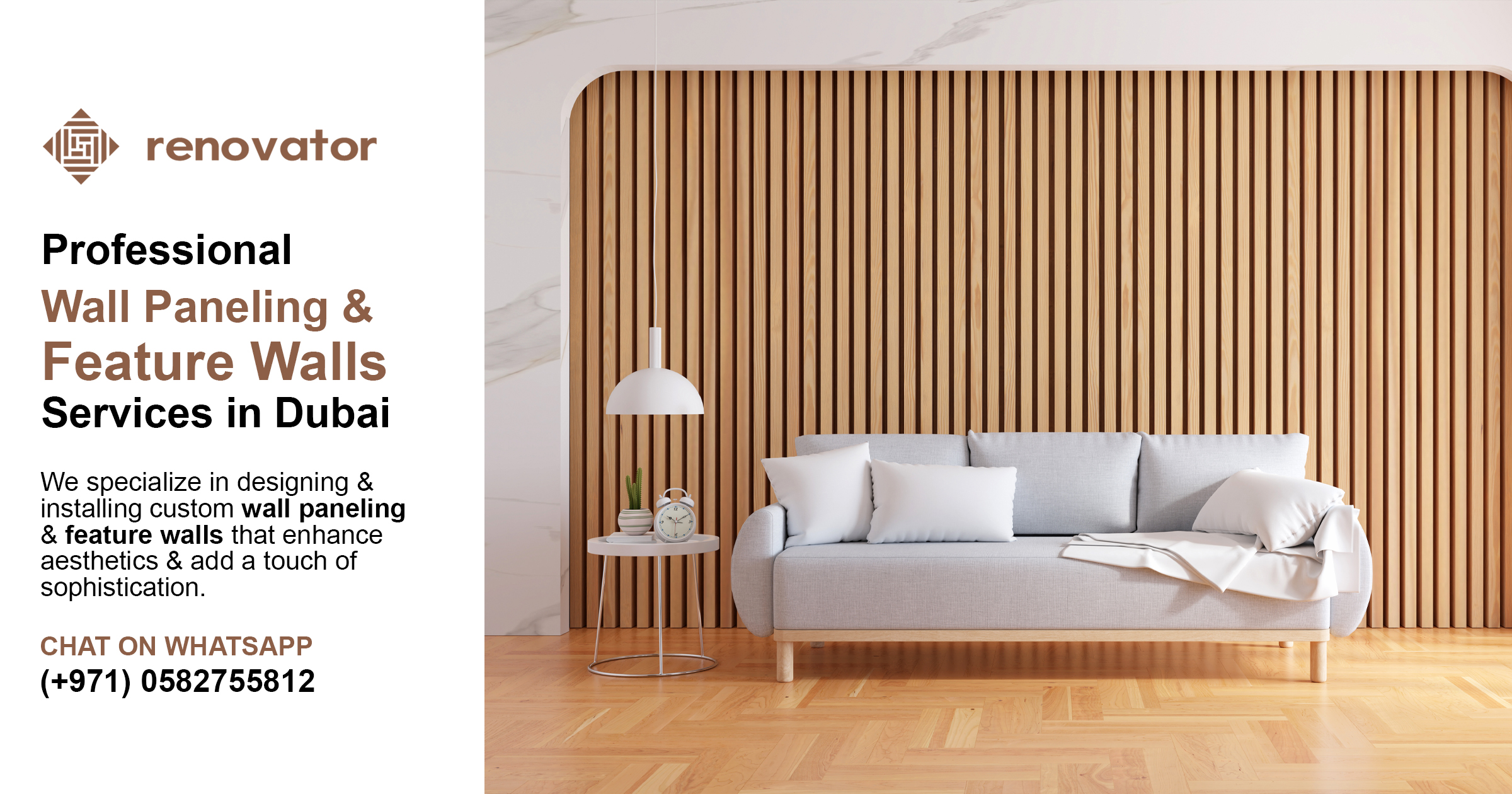
Wood slat and fluted panel walls are popular because they add rhythm and warmth. They can make a plain room feel more designed without using heavy decoration. Vertical slats can help a low ceiling feel taller. Wood tones can soften modern interiors and work well with neutral furniture, stone-look surfaces, and warm lighting.
Use slats carefully. A full wall of strong texture may feel busy, especially in small rooms. Consider using slats on part of the wall, behind the TV, behind a bed, or as a side accent. Pairing fluted panels with flat painted areas can create balance. If the room already has patterned curtains, rugs, or furniture, keep the wall simpler.
Maintenance matters. Slats and grooves collect more dust than flat walls. Choose finishes that can be cleaned and installed with consistent spacing.
Painted Panel and Classic Molding Ideas
Painted paneling is versatile because it can be subtle or formal depending on the pattern and color. Simple rectangular panels can suit bedrooms, dining rooms, corridors, and living rooms. Wainscoting can add classic detail to lower walls. Full-height molding can make a room feel more elegant.
The beauty of painted paneling is that it can be refreshed later with paint. It is often more adaptable than strong material finishes. For rental or resale properties, neutral painted paneling can add visual value without becoming too personal. For personal homes, deeper colors can create mood and sophistication.
Proportion is important. Panel sizes should relate to wall width, ceiling height, furniture, and switch locations. Poorly proportioned molding can look random. A clean layout makes even simple materials feel custom.
Stone-Look and Marble-Look Feature Walls
Stone-look or marble-look surfaces can create a premium focal point. They work well in living rooms, entrances, dining areas, and TV walls. The design should usually be kept simple around them because the material already has visual movement. Pairing stone-look panels with clean cabinets, subtle lighting, or wood accents can create a balanced effect.
In smaller apartments, lighter stone-look finishes are often safer. Dark dramatic finishes can be beautiful but need enough room and lighting. In villas, larger walls can carry stronger stone effects. Joins, edges, and lighting must be planned carefully so the finish looks intentional.
Natural stone and stone-look panels have different maintenance and installation requirements. Discuss weight, fixing, edge treatment, and cleaning before choosing.
LED Backlit Feature Walls
Backlighting can make a wall feel premium when used with restraint. It can sit behind panels, around a headboard, along vertical strips, under shelves, or behind stone-look surfaces. The lighting should create depth, not glare. Warm, soft light usually works best in living spaces and bedrooms.
Plan the electrical work before paneling begins. Drivers, switches, dimmers, and access points need to be included. If the lighting is sealed inside the wall with no access, maintenance becomes difficult. Also consider whether the light will reflect on a TV, mirror, glossy panel, or glass surface.
LED lighting adds cost, so use it where it has real impact. One well-placed glow can look more refined than many bright strips.
Office and Reception Feature Walls
Office and reception feature walls should look polished, durable, and aligned with the business. They may include wall paneling, signage, acoustic panels, wood finishes, stone-look surfaces, brand colors, or controlled lighting. The wall should photograph well and create a professional first impression.
For commercial spaces, maintenance and durability are important. The finish may be touched often or cleaned regularly. Lighting should support visibility, not only mood. If signage is included, wiring and fixing points should be planned. Acoustic comfort may also matter in meeting rooms, reception areas, and entertainment rooms.
Mistakes to Avoid
Avoid choosing a feature wall that fights the furniture. The design should sit behind or around the furniture comfortably. Avoid too many materials on one wall. Wood, stone, mirrors, shelves, lighting, paint, and metal trims can work together, but only when controlled. Avoid ignoring switches, sockets, AC controls, and wall-mounted devices. These need to be integrated into the design.
Do not use paneling to cover active damp or wall damage without repair. Decorative finishes should sit on a prepared surface. Avoid copying a design without adjusting scale. A wall that looks beautiful in a showroom may not suit a smaller apartment bedroom or a narrow corridor.
Getting the Idea Built
To turn an idea into a real feature wall, send Renovator photos, wall dimensions, room type, furniture layout, inspiration images, and notes about lighting, TV mounting, storage, or acoustic needs. Renovator can then recommend whether the best approach is painted paneling, wood slats, stone-look finish, LED feature, TV wall, or a custom combination.
For an early budget check, the wall paneling cost calculator can estimate a planning range for the wall type, size, lighting, material, and finish level you are considering.
Matching the Feature Wall to the Rest of the Home
A feature wall should not feel disconnected from the rest of the property. If the home has warm wood furniture, the wall can repeat a similar tone. If the kitchen has clean white and grey finishes, the living room feature wall can use a softer neutral or controlled stone-look surface. If the bedrooms are calm and minimal, the feature wall should add texture without becoming loud. Consistency makes the renovation feel intentional.
For apartments, one strong feature wall is often enough. For villas, several feature walls can work if they share a design language. For example, the living room may use a media wall, the bedroom may use soft paneling, and the entrance may use a wood or stone-look feature. They do not need to match exactly, but they should feel related through color, material, or line.
How to Choose Between Ideas
If the room feels cold, choose wood, fabric, or warm paint. If it feels flat, choose texture or lighting. If it feels cluttered, choose closed storage or a cleaner TV wall. If the room is small, choose light colors and vertical lines. If the room is large, you can consider stronger materials, larger panels, or bolder lighting. If the property is for rental, choose durable, neutral, easy-maintenance finishes.
The right feature wall is the one that improves the room after furniture, lighting, and daily use are considered. Renovator can help filter ideas so the final design is not only attractive, but also practical for the actual Dubai property.
Final Design Check
Before approving the idea, look at the wall with the furniture in mind. Check where the bed, sofa, TV, desk, curtains, switches, and lights will sit. Confirm that the feature wall will still be visible after the room is furnished. Decide whether the wall should be the main focal point or a quiet background. This final check prevents the design from becoming too strong, too hidden, or too difficult to maintain.
It also helps to choose the finish in the actual room light when possible. Dubai homes can have strong daylight, warm evening lighting, glossy floors, and neutral walls that change how materials appear. A wood tone, paint color, or stone-look panel can look different in a showroom than it does beside your sofa, curtains, and flooring. Testing the idea against the real room reduces surprises.
Related service
Wall Paneling & Feature Walls
Transform your interiors with Renovator’s custom wall paneling and feature walls in Dubai. High-quality materials, expert craftsmanship & innovative designs.
Wall Paneling & Feature Walls
Wall Paneling Cost in Dubai: Materials, Labor & Finish Options
A cost guide for wall paneling and feature wall projects in Dubai.
Read the Guide
Wall Paneling & Feature Walls
Wall Paneling & Feature Walls in Dubai: Materials, Styles & Pricing
A visual guide to feature walls, wall paneling materials, finishes, lighting, and practical planning for Dubai interiors.
Read the GuideRenovator advice
Ready to plan your renovation?
Send us photos of your space on WhatsApp and our team will guide you on the next steps.