Wall Paneling & Feature Walls
Wall Paneling & Feature Walls in Dubai: Materials, Styles & Pricing
A visual guide to feature walls, wall paneling materials, finishes, lighting, and practical planning for Dubai interiors.
Renovator advice
Want help with this project?
Share your space and goals with Renovator on WhatsApp.
What Wall Paneling Can Change
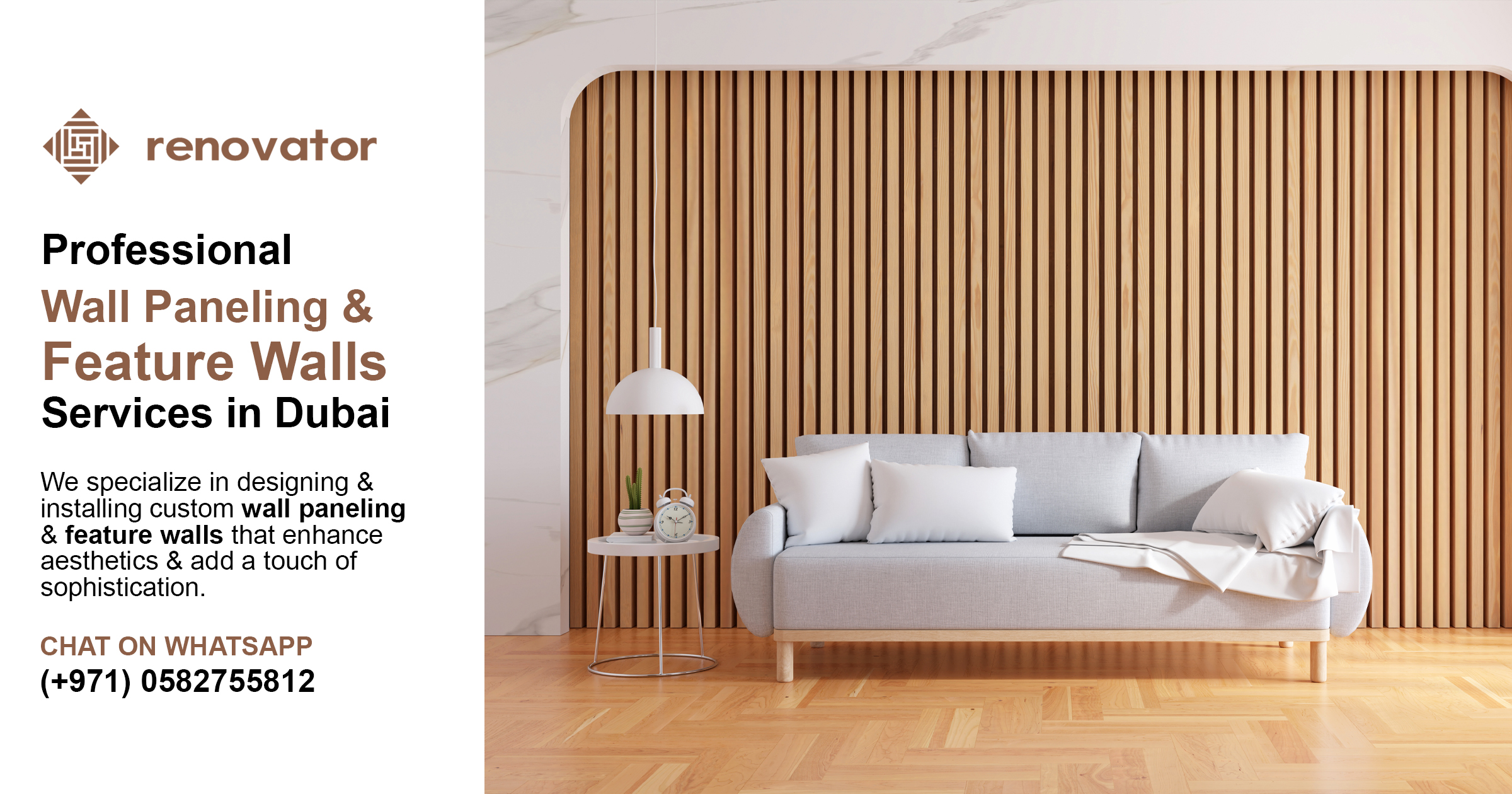
Wall paneling and feature walls can change the character of a room faster than almost any other interior upgrade. A plain wall can become a focal point, a bedroom can feel more finished, a living room can gain depth, and an office or reception area can look more professional. In Dubai homes, wall paneling is often used to add warmth, texture, structure, and a custom-made feeling without renovating the whole property.
The best wall paneling is not only decorative. It can improve proportions, hide minor wall imperfections, organize a TV area, support lighting, add acoustic comfort, create a headboard wall, define a dining area, or make an entrance corridor feel intentional. A feature wall can be subtle and architectural, or it can be bold with texture, lighting, and premium materials. The right choice depends on the room, wall size, furniture layout, lighting, and how much attention the wall should draw.
Before choosing a design, decide the job of the wall. Is it meant to create a calm background, make a luxury statement, support a TV, hide cables, improve acoustics, or coordinate with a wider renovation? A bedroom feature wall behind the bed has different needs from a TV wall, an office reception wall, or a corridor wall. Once the purpose is clear, material and style decisions become easier.
Where Feature Walls Work Best
Feature walls work well in living rooms, bedrooms, dining areas, corridors, entrances, offices, majlis spaces, reception areas, and entertainment rooms. In a living room, the wall may need to coordinate with a media wall, sofa, rug, lighting, and storage. In a bedroom, it may act as an extended headboard and create a calmer backdrop. In an office or reception, it may reinforce brand identity and make the space feel more considered.
Not every wall should become a feature wall. If too many surfaces compete, the room can feel busy. Usually one strong wall is enough, especially in apartments. Villas and larger spaces can carry more detail, but the design still needs hierarchy. The best interiors use feature walls to guide attention, not scatter it.
Wall size matters. A narrow wall may suit vertical slats or a simple painted panel arrangement. A wide wall may allow larger geometric panels, lighting, built-in shelving, or a combination of materials. Walls with doors, switches, AC controls, or uneven corners need careful detailing so the paneling does not look interrupted.
Materials Used for Wall Paneling
MDF is one of the most common materials for decorative wall paneling because it can be cut, shaped, painted, and installed in many patterns. It works well for classic panel molding, modern geometric designs, fluted panels, and painted feature walls. Moisture-resistant options may be needed in certain areas, but MDF is generally best used away from direct water exposure.
Natural wood and veneer bring warmth and depth. They can make a room feel more premium and are often used in villas, bedrooms, offices, and living rooms. Wood finishes need thoughtful selection because color, grain, and finish affect the whole room. Dark wood can feel rich but may make a small room heavier. Lighter wood can feel calm and modern.
PVC, WPC, gypsum, acoustic panels, fabric panels, stone-look sheets, laminate, and textured panels can also be used depending on the purpose. PVC and WPC options can be practical in some conditions. Gypsum can create architectural forms and recessed details. Acoustic panels can improve comfort in entertainment rooms, offices, or spaces with echo. Stone-look panels can create a premium feature, especially around TV walls or entrance areas.
Choosing a Style
The style should match the property and furniture. Modern interiors often use clean vertical slats, flat panels, subtle grooves, or large-format surfaces. Classic interiors may use molding, wainscoting, framed panels, and painted decorative trim. Contemporary luxury styles may combine wood, stone-look surfaces, metal trims, and concealed lighting. Minimal interiors may use one material and let proportions do the work.
Scale is important. Small repeated patterns can feel busy on a large wall. Oversized panels can overwhelm a small bedroom. Vertical lines can make a ceiling feel taller. Horizontal lines can make a wall feel wider. Symmetry can make a room feel formal, while asymmetry can feel more modern. The design should consider furniture placement, not only the empty wall.
Color also changes the effect. Painting the paneling the same color as the wall creates subtle depth. Using a contrasting color makes the wall more dramatic. Wood tones add warmth. Stone-look materials add weight and luxury. Dark colors can create mood, but they need enough light and room size. Light neutrals are safer for smaller spaces and rental properties.
Wall Paneling and Media Walls
Wall paneling often overlaps with media wall design. A TV feature wall may use fluted panels, painted MDF, stone-look sheets, shelves, LED lighting, or a floating cabinet. If the wall only needs visual improvement, paneling may be enough. If it needs storage, hidden cables, device ventilation, TV mounting, and integrated lighting, a full media wall may be the better solution.
The difference is function. A feature wall is mainly decorative or architectural. A media wall is a functional built element that supports entertainment equipment and storage. Many projects combine both: paneling behind the TV, a low cabinet, cable route, and lighting. This can work very well in Dubai apartments where the living room needs to stay clean and uncluttered.
If the wall will carry a TV, plan the bracket, cable route, power point, internet, soundbar, and future access before installation. If lighting is included, plan drivers and switches. If shelves are included, plan weight and fixing. The earlier these decisions are made, the cleaner the installation will look.
Lighting and Shadow Detail
Lighting can make wall paneling look more expensive, but it should be designed carefully. LED strips, wall washers, spotlights, backlit panels, and cove lighting can all highlight texture. The goal is to create controlled shadow and depth. Poorly placed lighting can expose uneven surfaces, create glare, or make the wall too dramatic for daily use.
Vertical LED accents can work well with slats or side panels. Backlighting can add a premium effect behind stone-look panels or headboard features. Picture lights or wall washers can suit classic molding. For bedrooms, soft warm lighting usually feels better than bright cool lighting. For offices or reception areas, lighting may need to feel sharper and more professional.
Plan lighting before paneling is installed. Wiring, drivers, switches, dimmers, and access points need to be coordinated. If access is ignored, a simple LED repair may require opening finished work. Good feature wall design includes the hidden maintenance plan, not only the visible glow.
Cost Factors in Dubai
Wall paneling cost in Dubai depends on wall size, material, pattern complexity, surface preparation, lighting, painting, custom carpentry, and installation detail. A simple painted molding wall costs less than a full-height feature wall with fluted panels, veneer, LED lighting, storage, and stone-look surfaces. The number of cuts, curves, niches, edges, and joins affects labor. So does the existing wall condition.
The wall paneling cost calculator can help you compare a simple feature wall, wood slat wall, acoustic paneling, or LED-backed design before requesting a detailed quote.
For room-by-room inspiration, continue to the focused guide on feature wall ideas for Dubai apartments and villas.
When reviewing quotes, check whether they include measurement, design, material, wall preparation, panel fabrication, installation, painting or finishing, lighting, electrical work, silicone or edge finishing, and final touch-ups. If the quote only says “wall paneling” without explaining material and finish, it is difficult to compare.
Also clarify whether the design requires custom fabrication or ready-made panels. Ready-made panels may be faster, but they still need proper layout, edge finishing, and installation. Custom paneling offers better fit and proportion, especially for walls with switches, doors, AC controls, or unusual dimensions.
Maintenance and Durability
Wall paneling should be chosen with maintenance in mind. Textured panels and slats collect more dust than flat painted walls. Dark glossy surfaces may show fingerprints. Natural wood and veneer may need more careful cleaning. Painted MDF can be refreshed, but it should be protected from direct moisture. Acoustic fabric panels may need vacuuming or gentle cleaning.
In family homes, durability matters. Hallways and children’s rooms may need tougher finishes because walls are touched often. In rental properties, simple painted paneling may be easier to maintain than delicate premium materials. In offices, the finish should handle regular cleaning and still look professional.
Good installation affects durability. Panels should be aligned, fixed properly, finished cleanly at edges, and coordinated with skirting, sockets, switches, and ceilings. Poor alignment is visible immediately on a feature wall because the whole point is visual order.
Mistakes to Avoid
Avoid choosing a feature wall design without considering furniture. A beautiful wall can be hidden by a tall sofa, headboard, console, or curtains if the layout is ignored. Avoid making the wall too busy. Multiple materials, strong lighting, shelves, patterns, and dark colors can overwhelm a room when combined without restraint.
Do not ignore switches, sockets, AC controls, or wall-mounted devices. These details need to be integrated into the design. A panel pattern interrupted by a random switch can look careless. Also avoid installing paneling over damaged or damp walls without addressing the cause. Decorative finishes should not be used to cover active problems.
Finally, avoid copying a design at the wrong scale. Inspiration images are useful, but the design must be adapted to the actual wall dimensions, ceiling height, furniture, and lighting. Proportion is what makes paneling feel custom rather than pasted on.
How Renovator Can Help
Renovator can help design and install wall paneling as a standalone feature or as part of a wider renovation. The scope can include MDF paneling, decorative trims, wood-look finishes, fluted panels, TV feature walls, LED details, painting, and coordination with media walls or interior painting. If the project connects to a media wall, kitchen, or full home renovation, the materials and colors can be planned together.
Before requesting an estimate, share wall dimensions, photos, inspiration images, room type, furniture layout, and whether the wall needs lighting, TV mounting, storage, or acoustic treatment. Renovator can then recommend whether the best approach is simple paneling, a feature wall, a TV wall, or a more detailed custom installation.
Planning Information to Share
The most useful wall paneling brief includes straight-on photos, side photos, wall width, ceiling height, room use, furniture position, preferred materials, and any fixed elements on the wall. Mention sockets, switches, AC controls, doors, curtains, existing TV points, and damaged areas. If you want lighting, explain whether it should be decorative, practical, dimmable, or connected to an existing switch. If you want a TV feature wall, share TV size, soundbar plans, router location, and storage needs.
Inspiration images are helpful, but they should be paired with practical notes. Explain whether you like the color, pattern, texture, lighting, wood tone, or overall mood. Renovator can then adapt the idea to the actual wall rather than copying proportions that may not fit. This step is what turns wall paneling from a decorative add-on into a custom interior feature that suits the property.
Related service
Wall Paneling & Feature Walls
Transform your interiors with Renovator’s custom wall paneling and feature walls in Dubai. High-quality materials, expert craftsmanship & innovative designs.
Wall Paneling & Feature Walls
Feature Wall Ideas for Dubai Apartments and Villas
Design-led feature wall ideas for living rooms, bedrooms, offices, and entertainment spaces in Dubai.
Read the Guide
Wall Paneling & Feature Walls
Wall Paneling Cost in Dubai: Materials, Labor & Finish Options
A cost guide for wall paneling and feature wall projects in Dubai.
Read the GuideRenovator advice
Ready to plan your renovation?
Send us photos of your space on WhatsApp and our team will guide you on the next steps.