Media Walls
Media Wall Cost in Dubai: Design and Installation Factors
A focused guide to the design and installation choices that affect the cost of a custom media wall in Dubai.
Renovator advice
Want help with this project?
Share your space and goals with Renovator on WhatsApp.
Why Media Wall Cost Depends on Design Scope
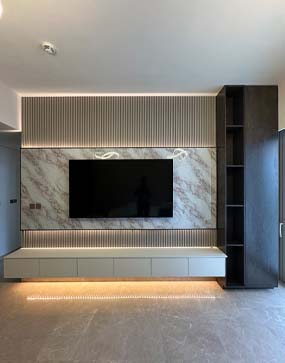
Media wall cost in Dubai depends less on the phrase “media wall” and more on what the wall is expected to do. A simple TV backing panel with a floating cabinet is very different from a full-height custom wall with storage, shelves, lighting, cable management, premium finishes, and TV mounting. Both may be called media walls, but the material, labor, fabrication time, and installation detail are not the same.
Use this cost guide with the main media wall units in Dubai guide, which covers design, materials, installation, and practical planning.
The main cost drivers are wall size, design complexity, material choice, storage quantity, lighting, electrical work, cable management, finishing, and site conditions. A compact apartment wall with a low unit may be relatively simple. A villa living room wall with side cabinets, stone-look panels, fluted details, shelves, LED lighting, and a large TV requires more planning and fabrication.
The best way to control cost is to define the function first. Do you need storage, or only a cleaner TV backdrop? Do you want hidden cables, display shelves, LED lighting, a soundbar niche, router space, or closed cabinets? Do you want a subtle wall or a statement feature? Once the function is clear, the cost can be shaped around real priorities.
For a quick budget check, start with the media wall cost calculator and use the result as a planning range before Renovator confirms measurements and materials.
Basic, Standard, and Premium Media Walls
A basic media wall usually focuses on the TV area. It may include a backing panel, paint or simple laminate finish, a floating low cabinet, and a concealed cable route. This works well for apartments where the goal is to remove visual clutter without making the room feel heavy. It is usually the most cost-controlled option because it uses fewer materials and less complex fabrication.
A standard media wall adds more function. It may include closed storage, open shelves, better cable access, LED lighting, a designed TV zone, and coordinated finishes. This is often the sweet spot for many Dubai homes because it improves the living room visually while solving practical storage and cable problems.
A premium media wall may include full-height custom carpentry, veneer, fluted panels, stone-look sheets, backlighting, display niches, integrated cabinets, special trims, large TV support, and detailed lighting control. This can create a strong focal point, but it needs careful proportion and installation quality. Premium does not only mean expensive materials; it means a more complete design and more precise execution.
Wall Size and Room Layout
Wall size affects material quantity, fabrication time, and installation complexity. A narrow wall may need a simpler design because too many cabinets or shelves can make it feel crowded. A wide wall can carry more storage or stronger design features, but the cost rises with area. Ceiling height also matters. Full-height panels and tall storage require more material and labor than a low floating unit.
Room layout affects the design. The TV should align with the seating position, not only the center of the wall. If the sofa is offset, the media wall may need asymmetry or a wider composition to feel balanced. If the room is small, cabinet depth should be controlled. Deep storage adds function but can reduce circulation. If the room is open-plan, the media wall should coordinate with the dining area, kitchen, and overall color palette.
Before pricing, share a straight-on photo of the wall and a side photo showing the room depth. This helps Renovator understand scale, furniture position, sockets, windows, curtains, and existing conditions.
Material Selection
Materials can change the cost significantly. MDF is common for painted or shaped panels. Plywood may be used where stronger structure is needed. Laminate can provide practical finishes in many colors and textures. Veneer adds warmth and a natural appearance. Gypsum can create architectural recesses. Fluted panels add texture. Stone-look sheets or porcelain-style surfaces create a premium backdrop but may require more careful handling and installation.
The right material depends on the design goal and maintenance expectations. A family living room may need durable, easy-clean finishes. A luxury villa may justify richer textures and premium surfaces. A rental apartment may benefit from a clean, practical design that looks good and is easy to maintain. Dark glossy finishes can look dramatic but may show fingerprints and dust. Light neutral finishes can make a small room feel larger.
Material cost is only part of the total. Cutting, edge finishing, painting, fixing, joins, and touch-ups affect the final result. A cheaper material can still look poor if installation is weak. A premium material can look disappointing if proportions are wrong.
Storage and Hardware
Storage is one of the biggest cost variables. A simple floating shelf or low cabinet costs less than a full storage wall with drawers, hinged doors, open shelves, side towers, and display niches. Drawers generally cost more than basic doors because they require runners and more precise fabrication. Push-open hardware, soft-close hinges, premium handles, and internal organizers add cost but improve daily use.
Plan storage based on real items. If you need space for routers, gaming consoles, books, toys, remotes, speakers, and decor, list them before design. Devices need ventilation and cable access. Display shelves need proportion and lighting. Closed cabinets need enough depth. A cabinet that is too shallow may look sleek but fail to fit the equipment it was meant to hide.
The best storage design balances appearance and practicality. Too much open shelving can look busy and collect dust. Too much closed cabinetry can make the wall heavy. A balanced mix usually works better.
Lighting and Electrical Work
Lighting can add a premium feeling to a media wall, but it affects cost because it requires LED strips or fixtures, drivers, switches, wiring, profiles, access points, and installation time. Backlighting, shelf lighting, vertical LED accents, and niche lighting all need planning. If lighting is added after the wall is built, retrofitting can be inefficient or messy.
Electrical planning should include TV power, HDMI routes, internet, set-top box, soundbar, gaming consoles, speakers, and future device changes. If sockets are in the wrong place, the wall may need additional electrical work before installation. If devices are hidden inside cabinets, cable holes and ventilation should be included.
Ask whether electrical adjustments and LED components are included in the media wall estimate. Some quotes include carpentry only, while electrical work is separate. Clarity prevents surprises.
Cable Management and TV Support
Cable management is often one of the main reasons homeowners request a media wall. Hidden wires make the living room feel cleaner, but the cables still need to remain accessible. A good design uses concealed routes, access holes, removable areas, or cabinet entry points so devices can be changed later. Permanently sealing cables behind fixed panels may look clean initially but can create maintenance problems.
TV support also matters. Large screens need secure mounting and suitable backing. The wall structure, bracket type, TV size, and cable route should be planned before panels are closed. If a soundbar is used, its position should be decided early. If the TV may be upgraded later, leave sensible allowance around the opening or design.
These details may not be obvious in a simple inspiration image, but they affect cost and usability. A media wall is both furniture and technical infrastructure.
Finishing, Painting, and Site Preparation
The existing wall condition affects cost. If the wall is uneven, damaged, damp, or full of old holes, preparation is needed before installation. If old furniture or shelves must be removed, that adds time. If the wall needs painting before or after the media wall is installed, that should be included in the sequence.
Finishing details include edges, trims, silicone, paint touch-ups, panel joins, cabinet alignment, shelf leveling, and cleaning. These details are what make a media wall look custom rather than assembled. Ask whether final touch-ups are included in the quote.
If the media wall is part of a wider renovation, coordinate it with painting, flooring, wall paneling, and lighting. The sequence should protect finished surfaces and avoid rework.
How to Compare Media Wall Quotes
Compare media wall quotes by scope, not only total price. Check wall dimensions, material, cabinet quantity, shelf quantity, hardware, lighting, electrical work, cable management, TV bracket, painting, removal of old items, and final finishing. One quote may include LED lighting and cable access while another only includes a panel and cabinet. Those are different products.
Ask whether the design is custom-sized for the wall. Ask how devices will be ventilated. Ask where LED drivers will be accessible. Ask whether the TV can be removed or upgraded later. Ask whether the finish will coordinate with other room elements. These questions reveal whether the quote is a complete media wall plan or only a decorative surface.
Getting a Useful Estimate
To get a practical media wall estimate, send wall width and height, TV size, room photos, sofa position, inspiration images, storage needs, device list, and lighting preferences. Mention whether you want a floating unit, full-height wall, storage wall, stone-look feature, fluted panels, or a simple clean backdrop. Renovator can then suggest a design scope that fits the room and budget.
Cost-Saving Without Losing the Custom Look
There are sensible ways to manage media wall cost without making the result feel unfinished. Keep the cabinet depth practical but not oversized. Use one main feature material instead of combining too many finishes. Limit open shelves if they do not serve a real purpose. Use lighting in one or two high-impact areas instead of adding LED strips everywhere. Choose a clean floating cabinet rather than full-height storage if the room does not need more cabinets.
You can also simplify the backing panel while keeping good cable management. Hidden wiring, correct TV height, and clean alignment often matter more than expensive surfaces. A simple painted panel with a well-made cabinet can look more professional than a complex wall with weak proportions. If the budget is tight, prioritize the parts that affect daily use: cable access, device ventilation, storage, secure TV support, and durable finishing.
Do not save money by removing access points or ventilation. Devices need to be serviceable, and LED drivers should not be buried permanently. The goal is a media wall that looks clean on day one and remains practical when you change devices, upgrade the TV, or need maintenance.
Final Approval Checklist
Before approving the design, confirm TV position, screen size, bracket type, cable route, socket locations, device storage, cabinet depth, shelf height, lighting color, switch control, access panels, and finish samples. Check that the wall design works with the sofa position and does not block curtains, doors, or AC controls. If you are planning painting or wall paneling in the same room, coordinate colors and sequence before work begins.
This final check protects the result. Media walls are highly visible, and small mistakes in height, alignment, or cable planning are noticeable every day. A careful approval process gives Renovator the information needed to build the wall around the real room rather than a generic inspiration image.
Related service
Media Wall Unit Installation
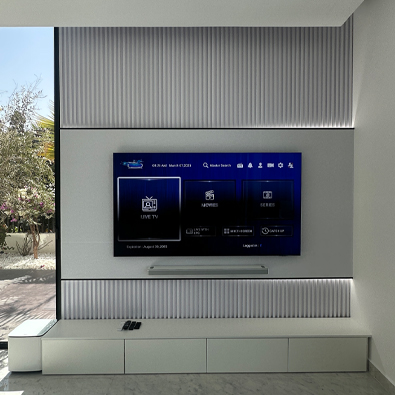
Transform your living room with Renovator's custom media wall units in Dubai. Personalized designs, quality craftsmanship, and seamless installation.
Media Walls
Media Wall Ideas for Dubai Apartments and Villas
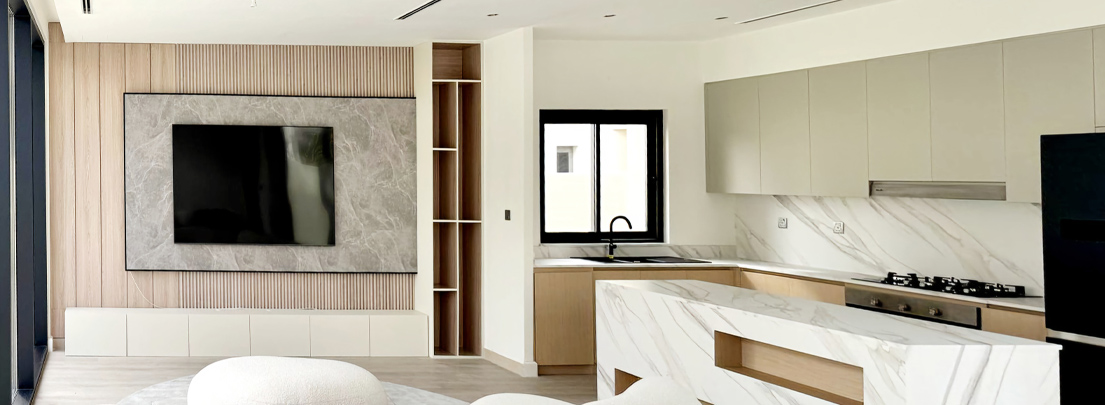
Design ideas for custom media walls that make Dubai living rooms cleaner, more practical, and more polished.
Read the Guide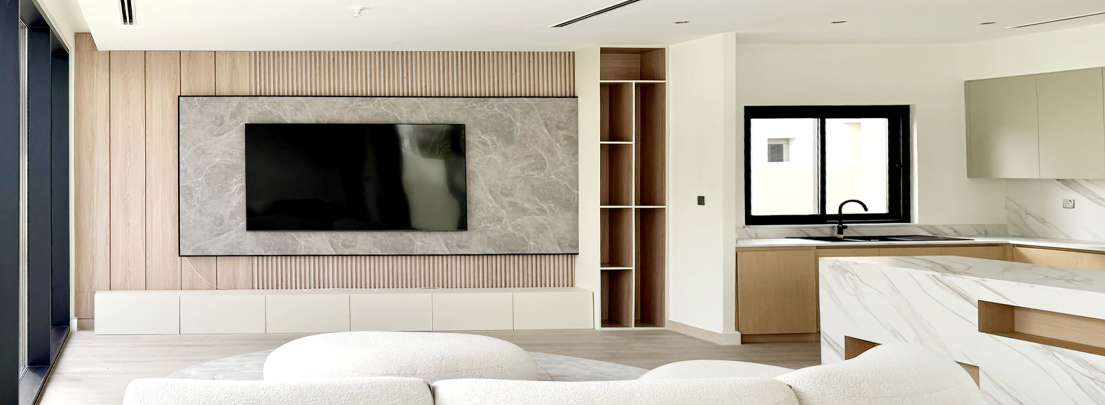
Media Walls
Media Wall Units in Dubai: Design, Cost, Materials & Installation
A guide to planning a custom TV media wall with storage, lighting, cable management, materials, and installation details.
Read the GuideRenovator advice
Ready to plan your renovation?
Send us photos of your space on WhatsApp and our team will guide you on the next steps.