Media Walls
Media Wall Units in Dubai: Design, Cost, Materials & Installation
A guide to planning a custom TV media wall with storage, lighting, cable management, materials, and installation details.
Renovator advice
Want help with this project?
Share your space and goals with Renovator on WhatsApp.
What a Media Wall Should Actually Do
A media wall is more than a decorative frame around a television. In a Dubai home, it often becomes the visual anchor of the living room, the main storage surface, the place where cables disappear, and the feature that makes an apartment or villa feel finished. A good media wall should improve the room both visually and practically. It should make the TV area cleaner, provide the right amount of storage, support the equipment safely, hide wiring, suit the viewing distance, and match the wider interior style.
The mistake many homeowners make is starting with a photo and asking for the same look without checking whether it suits their wall, TV size, seating distance, storage needs, and electrical points. A design that looks excellent in a large villa living room may feel too heavy in a compact apartment. A floating unit that looks minimal may not provide enough storage for consoles, routers, remotes, soundbars, and family items. A dramatic stone-look feature wall may need careful planning for weight, joins, lighting, and access.
The best media wall projects begin with the practical questions. What size is the TV now, and might it be upgraded later? Where is the sofa placed? Do you need closed storage, open display shelves, or both? Do you use a soundbar, speakers, gaming consoles, receiver, Wi-Fi router, or set-top box? Do you want warm ambient lighting or a clean architectural look? Should the wall feel subtle, premium, dramatic, or family-friendly? These answers shape the design before materials are chosen.
Media Wall Types for Dubai Homes
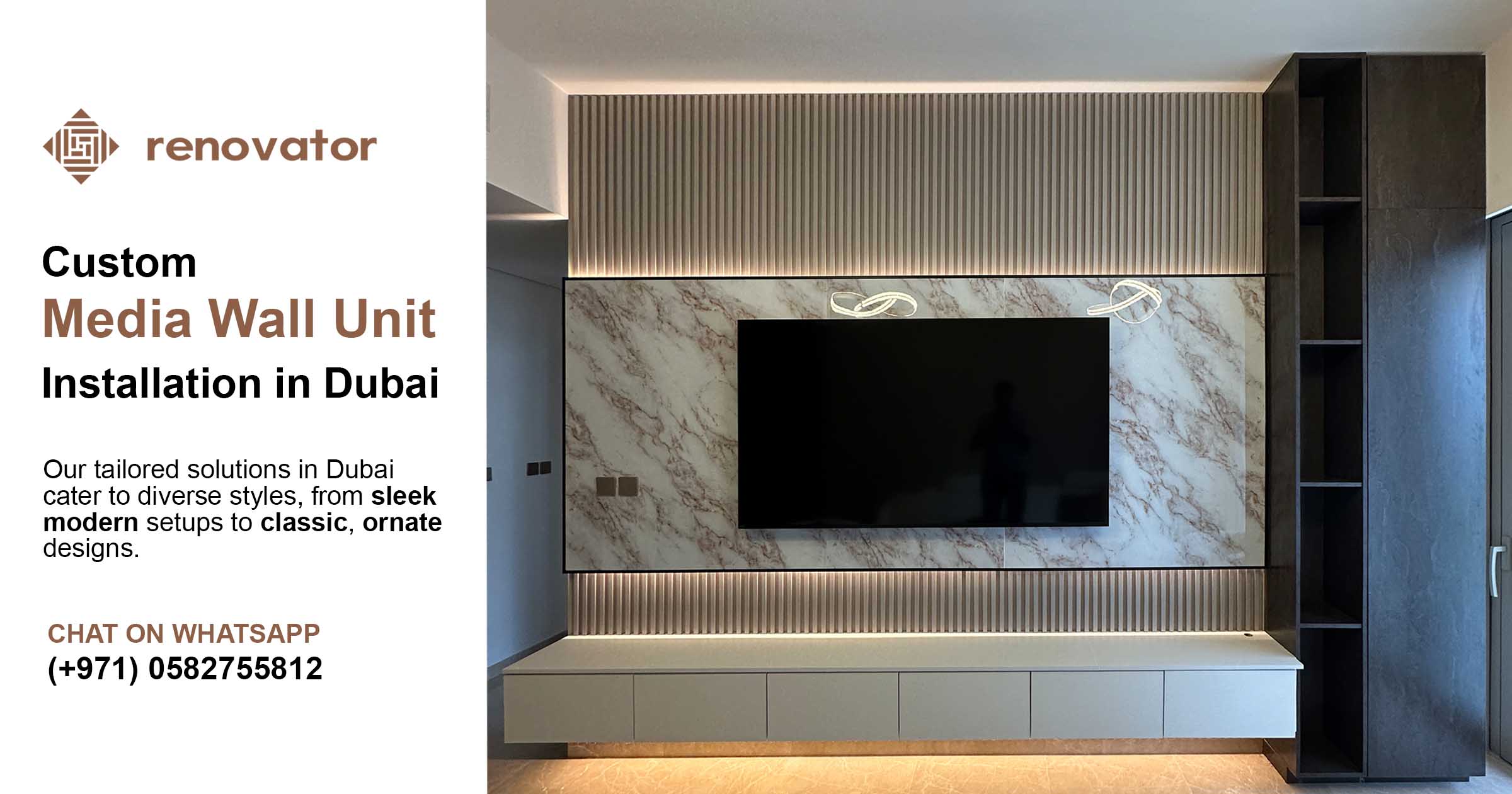
Media walls can be simple or highly customized. A floating TV unit is often the lightest approach. It can include a low cabinet, concealed cable route, and a painted or paneled backing. This works well for apartments where the goal is to reduce clutter without making the room feel smaller. A full-height media wall creates a stronger feature and can include vertical panels, niches, shelves, LED lighting, and decorative materials. This works well when the wall is wide enough and the living room needs a focal point.
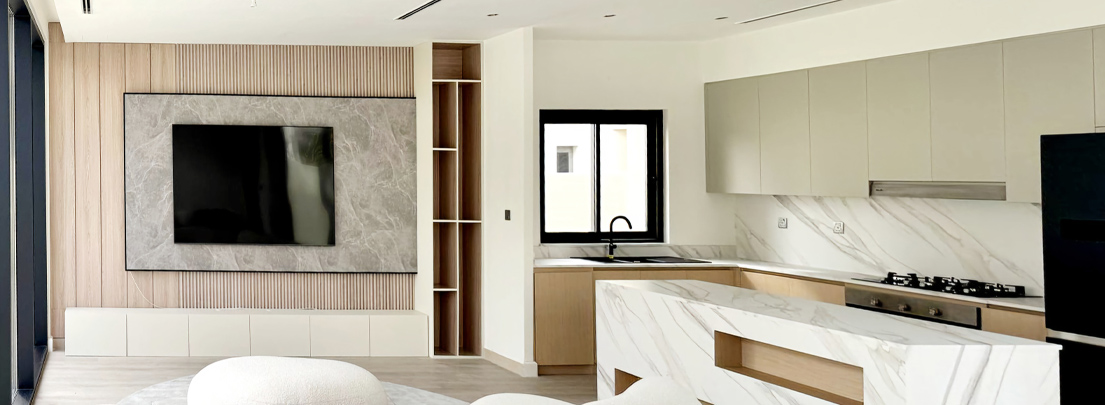
Storage media walls are practical for families because they combine the TV with cabinets, drawers, and display areas. The design may include closed base cabinets for everyday items, side cabinets for larger storage, open shelving for decor, and hidden access for devices. A premium media wall may use veneer, fluted panels, stone-look sheets, textured finishes, metal trims, or backlit elements. The challenge is keeping the design balanced so it does not become visually busy.
Small living rooms need special care. In a compact Dubai apartment, the media wall should make the room feel organized, not crowded. Slim profiles, floating cabinets, light finishes, vertical lines, and controlled lighting can help. If the wall is narrow, avoid forcing too many shelves or materials into the design. Sometimes the most elegant solution is a clean panel, a low cabinet, hidden wiring, and one carefully placed detail.
Design Proportion and TV Placement
The TV should not be placed only according to the center of the wall. It should be placed according to comfortable viewing from the seating area. Height matters. If the TV is too high, the room may look dramatic but become uncomfortable for everyday viewing. If it is too low, it may conflict with cabinet height, soundbar placement, or furniture. The right height depends on seating, screen size, and viewing distance.
Proportion also matters around the TV. The wall should leave enough breathing space so the screen does not look trapped. Shelves should not crowd the TV. Vertical panels should line up with the cabinet or wall width intentionally. If LED lighting is used, it should highlight depth without creating glare. A media wall should look good when the TV is off, but it should still function well when the TV is in use.
Consider future changes. Many homeowners upgrade TV size after a few years. If the media wall is built too tightly around one screen, future upgrades become difficult. Leaving sensible allowance around the TV, planning cable routes, and using accessible mounting points can make the wall more flexible.
Materials and Finishes
Material choice affects the look, price, durability, and installation method. MDF and plywood are common for custom carpentry because they can be shaped, painted, laminated, or veneered. Laminate is practical and available in many finishes. Veneer adds warmth and a natural look but needs proper care. Painted panels can create a seamless finish when preparation is done well. Gypsum can be useful for architectural forms and recessed details. Stone-look porcelain, compact sheets, or decorative panels can create a premium effect without always using heavy natural stone.
Fluted panels and wood slats are popular because they add texture and vertical rhythm. They work especially well when the room needs warmth. However, textured surfaces collect more dust than flat panels, so cleaning should be considered. Glossy or dark finishes can look striking but may show fingerprints and dust. Light neutral finishes can make small rooms feel larger, while darker finishes can create a cinema-like mood if the room has enough space and lighting.
The material behind the TV should also be considered for heat, support, and maintenance. Devices need ventilation. LED drivers need access. Heavy panels need secure fixing. If the wall will hold a large TV or shelves, the substrate and support method should be planned properly. A media wall is not just decoration; it is a built element that carries equipment and needs to remain serviceable.
Storage Planning
Good media wall storage begins with a list of what needs to be stored. Common items include remotes, game controllers, routers, TV boxes, speakers, books, decor, toys, candles, documents, and spare cables. Closed storage hides clutter and keeps the room cleaner. Open storage adds personality but can look messy if overused. The best design usually combines both.
Base cabinets are useful because they sit under the TV and keep heavier items low. Drawers are practical for small items, while hinged doors may work better for larger equipment. If devices will be placed inside cabinets, plan ventilation and cable access. If the router is hidden, make sure the signal is not blocked by the wrong material or location. If a soundbar is used, decide whether it will sit visibly, be wall-mounted, or fit into a niche.
Storage depth should suit the room. Deep cabinets provide more capacity but can make the living area feel smaller. Shallow cabinets look elegant but may not fit equipment. Before fabrication, measure the devices that need to fit. It is better to design storage around real equipment than discover after installation that a console or receiver does not fit properly.
Cable Management and Access
Cable management is one of the main reasons to build a media wall. Visible wires can make even a premium living room feel unfinished. Planning should include TV power, HDMI cables, internet, speakers, soundbar, gaming consoles, set-top boxes, charging points, and future device changes. The cable route should be clean, but it should not become impossible to access.
A common mistake is hiding every cable permanently behind fixed panels. This looks clean at handover but becomes frustrating when a device needs to be changed. A better approach is to use concealed routes with planned access points. Removable panels, cabinet access holes, brush plates, or service openings can keep the look clean while allowing maintenance.
Think about the devices that generate heat. Consoles, receivers, and TV boxes need air movement. If they are sealed inside cabinets without ventilation, performance and lifespan can suffer. Vent slots, open backs, or carefully designed gaps can solve this while keeping the design refined.
Lighting for Media Walls
Lighting can make a media wall feel deeper and more premium, but it should be controlled. LED strips, recessed lighting, shelf lighting, vertical accents, and backlighting can all work. The goal is to add warmth and depth without glare on the TV screen. Lighting that looks impressive in a photo may become distracting during evening viewing if it is too bright or poorly positioned.
Warm white lighting is often preferred for living spaces because it feels softer. However, the lighting temperature should coordinate with the rest of the room. If the living room uses warm lighting and the media wall uses cool white LEDs, the design can feel mismatched. Dimmers or separate switches can help because the wall may need different moods for daytime, evening, and TV viewing.
LED drivers and transformers should be accessible. If they are sealed behind fixed panels, a small maintenance issue can become a larger repair. Good lighting design includes not only the visible glow but also the hidden service plan.
Cost Factors
Media wall cost in Dubai depends on wall size, design complexity, materials, cabinet quantity, lighting, TV mounting, cable management, finishing, and site conditions. A simple floating cabinet with a clean panel will cost less than a full-height wall with storage, stone-look finishes, shelves, and integrated lighting. Custom carpentry, premium hardware, veneer, specialty panels, and detailed painting all add cost.
If you are still comparing design directions, review these media wall ideas for Dubai apartments and villas before finalizing the scope.
When comparing estimates, check what is included. Does the quote include design, measurement, materials, fabrication, installation, lighting, electrical adjustments, painting, TV mounting, cable route, hardware, and final finishing? Are LED drivers included? Are shelves and drawers included? Is the TV bracket included or separate? Are old units removed? Is wall repair included? Without these details, two prices may describe very different projects.
A good estimate should be based on photos, wall dimensions, TV size, preferred style, storage requirements, and lighting expectations. Inspiration images are useful, but the quote should be adapted to the actual wall and room.
You can use the media wall cost calculator to create a planning range from wall size, media wall type, storage, lighting, cable management, and finish level.
Installation Process
A typical media wall project begins with consultation, site measurement, design direction, material selection, and quotation. After approval, fabrication and preparation begin. The site may need electrical points adjusted, walls repaired, or mounting support checked. Installation then brings together carpentry, panel fixing, lighting, cable routing, painting or finishing, TV mounting, and final testing.
During installation, alignment matters. Panel joints, shelf heights, cabinet gaps, vertical lines, TV position, and lighting routes all need careful execution. Small errors are visible because the media wall is usually the focal point of the room. Final testing should include TV placement, cable access, lighting operation, cabinet movement, and basic cleaning.
If the media wall is part of a wider renovation, sequence it carefully. It may need to happen after dusty work but before final painting touch-ups. If flooring, wall paneling, or painting is also planned, those works should be coordinated so the final finish looks integrated.
Media Wall and Interior Style
A media wall should match the room rather than compete with it. In modern apartments, clean lines, floating storage, and light finishes can keep the room open. In villas, richer materials, symmetrical storage, lighting, and larger proportions may work better. For a minimal look, reduce visible shelves and use concealed storage. For a warmer look, combine wood textures with painted surfaces. For a premium look, consider stone-look panels, fine lighting details, and carefully proportioned cabinets.
The wall should also connect with other services. If the room needs painting, the paint color should support the media wall finish. If wall paneling is used elsewhere, the media wall can echo the same material language. If the home has custom cabinetry in the kitchen or hallway, the media wall finish can coordinate with it. This is where a custom approach becomes valuable.
Next Step
Before asking for a media wall estimate, gather the wall width and height, TV size, sofa position, inspiration images, storage needs, device list, and lighting preference. Take photos from the front and from the side so depth and room layout are clear. Renovator can then advise whether the best solution is a simple TV unit, a feature wall, a storage media wall, or a full custom installation with lighting and cable management.
Related service
Media Wall Unit Installation
Transform your living room with Renovator's custom media wall units in Dubai. Personalized designs, quality craftsmanship, and seamless installation.
Media Walls
Media Wall Ideas for Dubai Apartments and Villas
Design ideas for custom media walls that make Dubai living rooms cleaner, more practical, and more polished.
Read the Guide
Media Walls
Media Wall Cost in Dubai: Design and Installation Factors
A focused guide to the design and installation choices that affect the cost of a custom media wall in Dubai.
Read the GuideRenovator advice
Ready to plan your renovation?
Send us photos of your space on WhatsApp and our team will guide you on the next steps.